

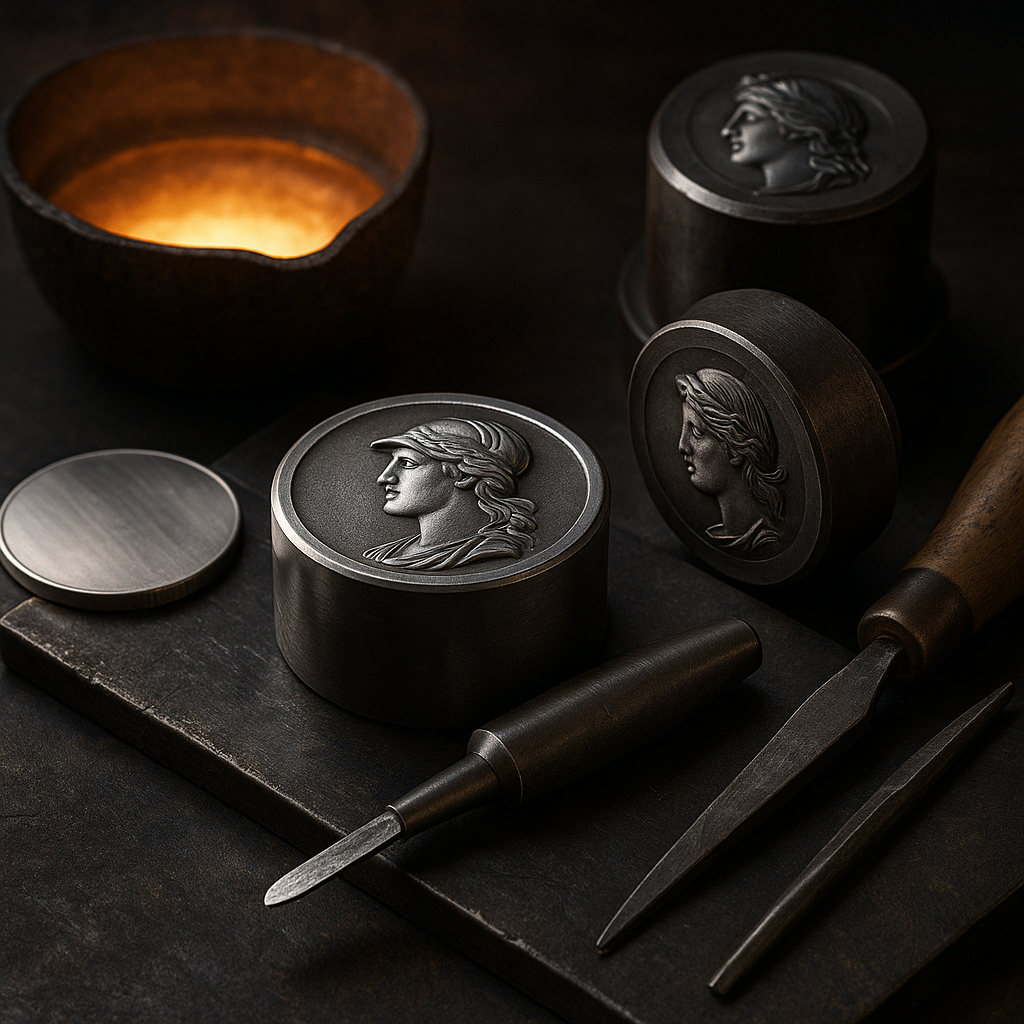
How Coins Are Created: From Raw Metal to Masterpiece
– by Opulence, The Collection by LKL
⸻
When you hold a luxury coin in your hand — its surface shiny, its details razor-sharp — it can feel like magic.
But behind every masterpiece lies a meticulous, multi-step journey that transforms raw metal into a collector's treasure.
At Opulence, we only work with mints and artisans who treat this process as both a science and an art. From silver blanks to antique finishes — this is how the coins come to life.
⸻
1. Beginning: Melting & Blanking
It all starts with pure silver — usually .999 or higher in fineness. The metal is melted down, refined, and rolled into sheets of uniform thickness.
From there, blank discs (called planchets) are punched out. These raw, undecorated rounds are the canvases of the future for high-class coinage.
At this stage, they are cleaned, polished and weighed to perfection.
⸻
2. The Soul of the Coin: Engraving of Punches
This is where the design comes in.
Master engravers create a negative image of the coin's artwork on steel dies — one for the front (obverse), one for the back (reverse). This is where your gorilla, grizzly, goddess or warrior is born.
Some designs are hand-sculpted in 3D, scanned and digitized for microscopic precision. Others are shaped entirely with traditional tools — often over weeks of work.
⸻
3. The Embossing Moment: When Pressure Meets Precision
The polished planchet is placed between engraved dies and struck under enormous pressure — often several hundred tons. For premium coins, this is sometimes done multiple times for maximum clarity.
This is where the coin comes to life and every ridge, notch and muscle appears in astonishing detail.
At Opulence we often offer:
• High Relief : The design rises clearly above the surface, creating a dramatic 3D effect.
• Ultra High Relief : Even more depth — almost sculptural.
• Smartminted™ : A modern technology that enables extreme detail on both sides, even on small coins.
⸻
4. The Finish: Gilding, Antique Finish & Color Magic
Once the minting process is complete, many coins receive their premium finishes that transform them into works of art:
• Antique Finish : A dark patina that highlights shadows and textures. Gives a timeless, museum-like feel.
• Selective Gilding : Real gold (usually 24K) is applied to specific parts of the coin — to highlight symbols, figures or text.
• Color application : Clear, durable colors or enamel bring animals, art, and scenes to life — used on coins like Día de los Muertos or Deadliest Encounters .
• Proof Finish : Mirror-like surface with frosted details — elegant, distinctive and highly collectible.
⸻
5. The Final Detail: Numbering, Packaging & Certificates
Each finished coin is inspected, numbered (if part of a limited edition) and placed in a protective capsule or exclusive display box.
A Certificate of Authenticity (COA) confirms edition, specifications and authenticity.
After that, the coin is ready to be sent to collectors — or displayed in our vault.
⸻
Why It Matters
Knowing how a coin is made helps you appreciate the craftsmanship — and to see the difference between mass-produced rounds and genuine collectibles.
Every object in our collection reflects technology, intention and heritage.
Share:
From Gift to Inheritance
The 12 Stages of Falling in Love with a Coin