

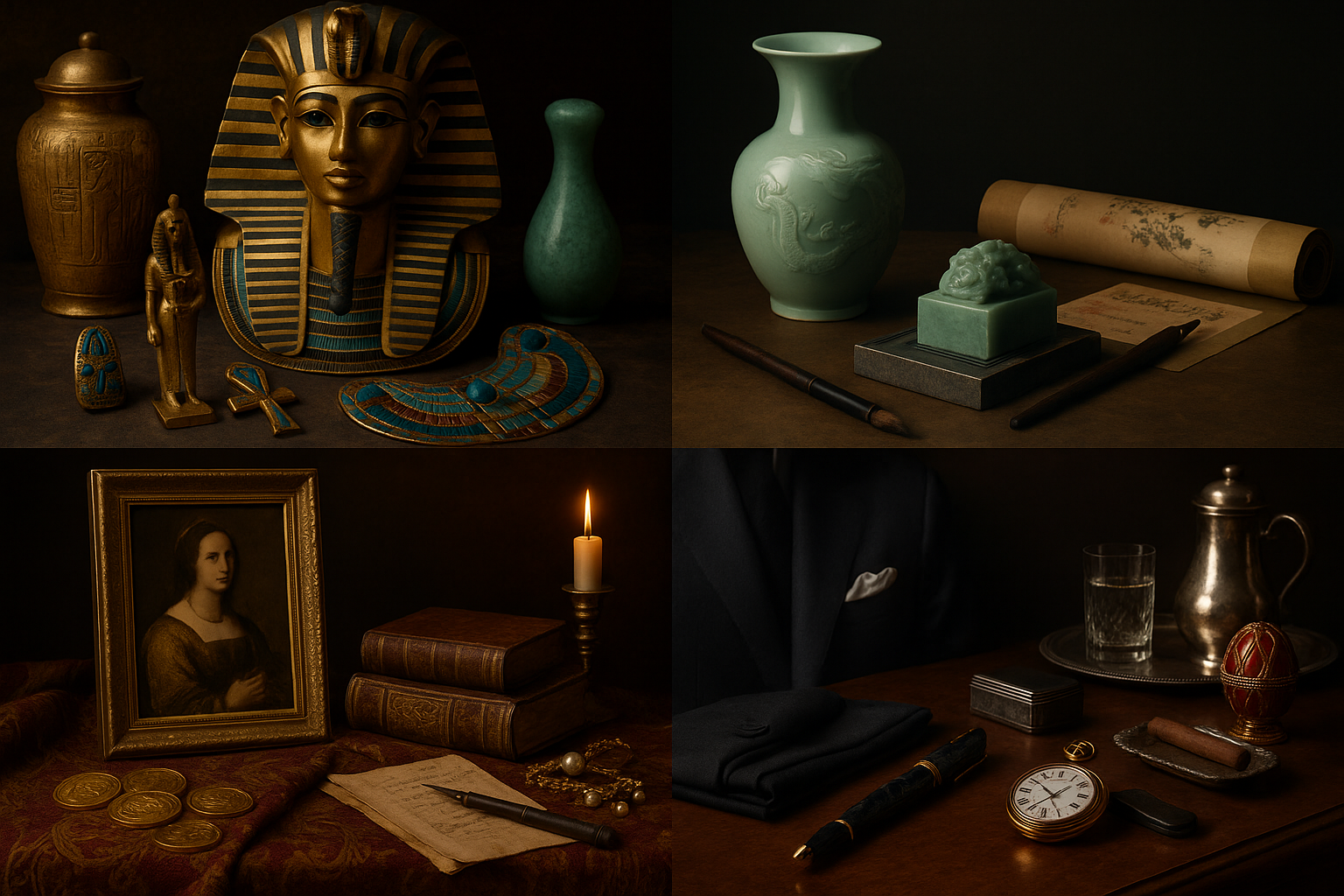
Luxury Across Cultures: How Different Civilizations Defined Prestige
– by Opulence, The Collection by LKL
⸻
Luxury is not a modern invention — it is an ancient language. But what people consider “luxury” has changed dramatically over time, place, and power.
At Opulence, we believe that luxury tells us what a culture valued most — and why. Let's take a journey through history and explore how prestige was defined in four of the world's greatest civilizations.
⸻
Ancient Egypt: Luxury as Divine Connection
In ancient Egypt, luxury was not just material—it was spiritual.
• Gold was seen as the skin of the gods.
• Lapis lazuli and turquoise were more valuable than silver.
• Priests and royalty wore symbolic amulets, ankhs and scarabs filled with meaning.
• Artisans created intricate canopic jars, burial masks, and even perfume cones for the elite.
Luxury reflected proximity to eternity—and only the elite were considered worthy of the divine materials.
⸻
Imperial China: Prestige in Harmony and Precision
In dynastic China, luxury meant balance, refinement, and control.
• Silk, once more valuable than gold, became China's diplomatic currency.
• Porcelain — flawless, delicate, and painted with spiritual symbols — symbolized perfection.
• The nobility used jade seals, carved brushes, and inkstones — tools of learning and rule.
• Calligraphy was an art reserved for the wise and powerful.
Here, luxury was cultural and intellectual—not just ornate, but meaningful.
⸻
The European Renaissance: Power, Patronage, and Art
In Renaissance Europe, prestige came through patronage and visibility.
• Wealthy families like the Medici commissioned large paintings, sculptures, and cathedrals to show influence.
• Gold-plated coins with family coats of arms were circulated to build reputation.
• Rare books, handwritten manuscripts, and specially made writing instruments were considered elite.
• Tailored clothing, jewelry, and imported perfumes signaled elevated status.
Here, luxury was both visual splendor and intellectual currency—a display of who you were and how you thought.
⸻
Modern Europe: Exclusivity and Craftsmanship
During the 19th and 20th centuries, luxury became a matter of taste and discretion.
• Watches, fountain pens, cigars, silverware, and tailored clothing marked the elite.
• Brands such as Montegrappa, Cartier and Fabergé emerged to satisfy the sophisticated collector.
• Limited editions, artisan signatures and numbered copies became central.
• A men's desk or a women's toilet curation was reminiscent of a personal museum.
Prestige evolved into quiet excellence — no longer golden walls, but rare details and timeless materials.
⸻
What does luxury mean to you?
Today, luxury is a blend of all eras: timeless materials, cultural symbols, quality craftsmanship and personal stories.
Share:
The Future of Gathering: Digital Twins, NFC and Blockchain Verification
How to Spot a Fake